
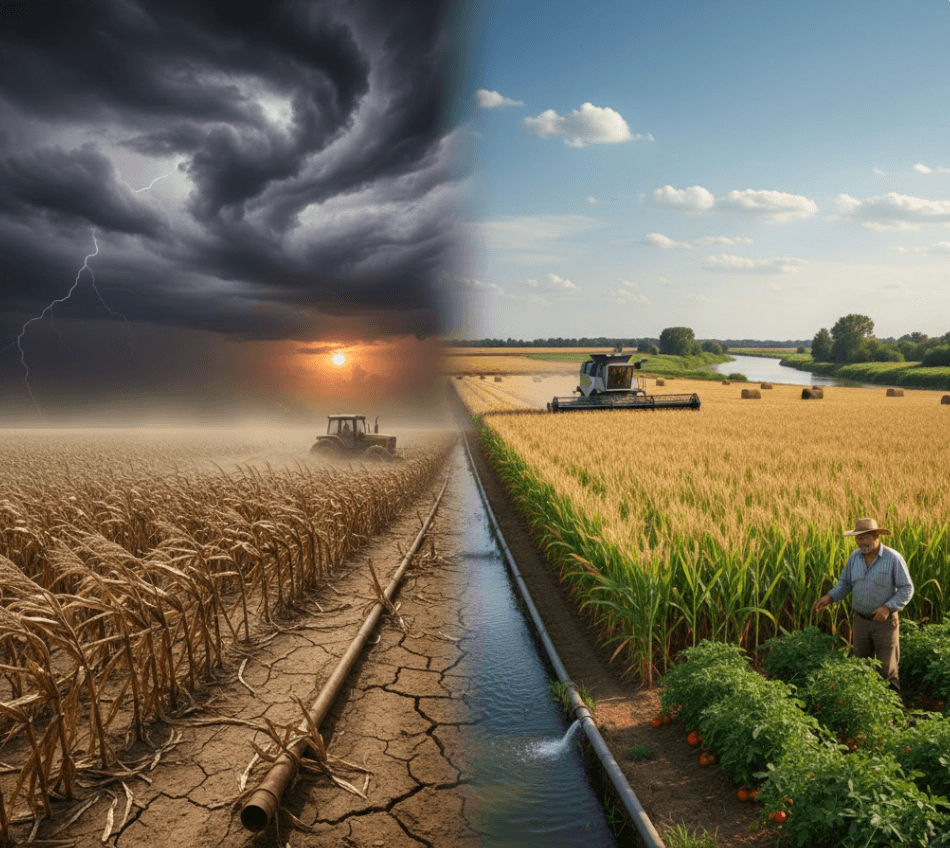
Heat damages crops in specific ways at specific times. Knowing which windows matter is what makes the difference between a general worry and an actionable plan.
What heat actually does to a plant
Three mechanisms, operating together.
Photosynthesis slows. Above a certain temperature the process becomes less efficient. The plant produces less of the sugars it needs to build grain.
Respiration accelerates. The plant burns more of what it has produced simply to sustain itself. Less is left over for yield.
Development speeds up. This is the one that is easiest to miss and often the most damaging. Heat pushes the crop through its growth stages faster. A shorter grain filling period means less time to accumulate weight, so grains end up smaller — even though nothing looked wrong along the way.
The two windows that matter
Flowering. Pollen is highly sensitive to heat. High temperatures during flowering cause pollen sterility, and sterile pollen means grain sites that never fill. The crop can look entirely healthy and still produce a poor yield, because the damage happened at a scale you cannot see.
The window is short — often just days — which is what makes it so unforgiving.
Grain filling. Heat here shortens the filling period and forces early maturity. The result is shrivelled, low-weight grain. Head count looks normal; the weighbridge disagrees.
In wheat, this is commonly called terminal heat stress and it is a well-documented cause of yield loss across northern India, particularly in late-sown crops that run into rising March temperatures.
Night temperature matters more than people expect
Attention naturally goes to daytime maximums. But warm nights are independently damaging.
Plants respire at night without photosynthesising. When night temperatures stay high, respiration losses continue while nothing is being produced to offset them. The plant depletes reserves it should be putting into grain.
A run of warm nights during grain filling reduces yield even where daytime highs were unremarkable.
What actually helps
Shift sowing dates. Moving the calendar so that flowering and grain filling occur before peak heat is among the most effective adjustments available. Sowing too early introduces different risks, so the shift has to be matched to variety duration and local conditions — but this is a genuine lever.
Choose appropriate varieties. Heat-tolerant and shorter-duration varieties exist for major crops. Shorter duration works partly by simply finishing before the heat arrives. Check what your state agricultural university recommends for your zone.
Maintain soil moisture through sensitive stages. Transpiration is how a plant cools itself, and it needs water to do it. A crop with adequate moisture tolerates moderate heat considerably better than one already under water stress. Light, frequent irrigation during heat events is often more useful than heavy application.
Mulch. Surface residue or mulch lowers soil temperature and conserves moisture. Both help. The effect on the root zone is more significant than it appears.
Keep nutrition balanced. Potassium in particular is associated with stress tolerance. A nutritionally stressed crop handles heat worse than a well-fed one.
Consider windbreaks. Hot dry winds accelerate moisture loss and compound heat damage. Field boundary planting reduces wind speed and moderates the microclimate. This is a multi-year investment rather than a seasonal fix.
Watching for it
Short-range temperature forecasts are reliable enough to be useful. If a heat event is forecast during flowering or grain filling, options are limited but not zero — ensuring the crop is not simultaneously water-stressed is the main one, and it is worth doing.
Longer-term, keeping your own record of when heat events arrived each year builds a local picture that informs next season's sowing decisions better than any general guidance.
The larger pattern
Rising temperature trends are documented across Indian agricultural regions. The practical consequence is that the sowing windows and variety choices that worked reliably in the past are becoming less reliable.
That does not call for panic, but it does argue for treating variety choice and sowing date as decisions to revisit each year rather than settled habits — and for taking your own local records seriously, because they capture what is happening on your field specifically.
Variety recommendations and sowing window guidance are zone-specific. Consult your state agricultural university or KVK for recommendations applicable to your area.